
Vacuum Filters
Vacuum Filters
Overview
Vacuum filters are essential devices—common in industries from laboratories and food processing to wastewater treatment—that leverage negative pressure to separate solids from liquids or gases. By applying a vacuum, these filters accelerate filtration, improve separation efficiency, and elevate throughput where gravity-based methods fall short.
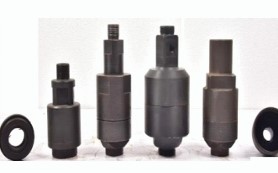
Vacuum Filters
Key Features
-
Fast, Efficient Filtration
Vacuum filters dramatically reduce processing time by using suction to pull liquid through the filter medium—ideal for operations requiring speed and consistency. -
Versatility Across Applications
Tailored for diverse uses—chemical labs, pharmaceutical testing, food and beverage, and wastewater treatment—vacuum filters adapt to many formats including cloth, paper, ceramic, and membrane media. -
High Throughput Production
Continuous vacuum systems enable uninterrupted processing of slurries and suspensions—rotating drums and belt formats support large-scale cake formation and solids separation. -
Energy-Efficient Operation
Ceramic vacuum filters, for example, cut energy needs by up to 90% compared to conventional systems, thanks to their capillary-driven filtration designs. -
Superior Solid Retention
These filters trap fine particulates effectively—forming a dense layer (cake) on the filter medium that enhances filtration quality, especially when pre-coated with inert materials like calcium carbonate.